 English
  Español
  Français
  Deutsch
  Português
  Italiano
  Русский
  中文(简体)
  日本語
日本語  한국어
한국어  العربية
  हिन्दी
  Nederlands
  Türkçe
  Polski
Choosing the Right Document Translation Service in a Globalized World
In today’s interconnected world, the ability to communicate across language barriers is no longer a luxury; it’s a necessity. Whether you’re a business expanding into international markets, a student researching foreign academic papers, or an individual preparing personal documents for overseas use, accurate and efficient document translation is paramount. But with a plethora of options available, from human translators to sophisticated AI tools, how do you pinpoint the best document translation service for your specific needs?
The “best” service isn’t a one-size-fits-all answer. It depends on a complex interplay of factors: the type of document, the required level of accuracy, your budget, your timeline, and the sensitivity of the information being translated. This guide aims to demystify the process, helping you make an informed decision that ensures your message is conveyed accurately, contextually, and professionally. We’ll explore the different types of translation services, what to look for in a provider, and how advancements in AI are reshaping the landscape.
Understanding the Different Types of Translation Services
Before diving into specific recommendations, it’s crucial to understand the fundamental approaches to document translation. Each has its strengths and weaknesses, making them suitable for different use cases.
Machine Translation (MT)
This is the most accessible and often the fastest method. Machine translation services use algorithms to translate text from one language to another without human intervention. Early MT systems were notoriously clunky and often produced nonsensical translations. However, with the advent of Neural Machine Translation (NMT), powered by deep learning, the quality has improved dramatically. NMT models can understand context and sentence structure much better, leading to more fluent and accurate translations.
Pros:
- Speed: Near-instantaneous translation for large volumes of text.
- Cost-effectiveness: Often free or very low cost.
- Accessibility: Widely available through online tools and apps.
Cons:
- Accuracy Fluctuations: While NMT is good, it can still struggle with nuanced language, idioms, cultural references, and highly technical jargon.
- Confidentiality Concerns: Free online tools might not offer robust data privacy, making them unsuitable for sensitive documents.
- Lack of Contextual Understanding: May miss subtle meanings or cultural nuances that a human would grasp.
Human Translation
This involves professional translators who are native speakers of the target language and possess expertise in the subject matter. Human translation is the gold standard for accuracy, nuance, and cultural appropriateness. It’s often combined with a rigorous quality assurance process, including proofreading and editing by a second linguist.
Pros:
- Highest Accuracy: Ideal for critical documents where precision is paramount.
- Nuance and Context: Captures cultural subtleties, idioms, and tone effectively.
- Subject Matter Expertise: Specialized translators ensure correct terminology in fields like law, medicine, or engineering.
- Confidentiality: Professional agencies typically have strict NDAs in place.
Cons:
- Cost: Significantly more expensive than machine translation.
- Time: Can be time-consuming, especially for large projects.
- Scalability: May struggle to handle massive volumes within very tight deadlines.
Post-Editing Machine Translation (PEMT)
This hybrid approach combines the speed of machine translation with the accuracy of human oversight. A document is first translated by a machine, and then a human editor reviews and corrects the output. This method offers a balance between cost, speed, and quality, making it a popular choice for many businesses.
Pros:
- Faster and Cheaper than Pure Human Translation: Leverages MT speed for the initial draft.
- Higher Quality than Pure MT: Human review corrects errors and improves fluency.
- Scalable: Can handle larger volumes than pure human translation.
Cons:
- Quality Varies: Dependent on the quality of the initial MT output and the skill of the post-editor.
- Still Requires Human Oversight: Not as hands-off as pure MT.
Key Factors to Consider When Selecting a Document Translation Service
With these different approaches in mind, let’s delve into the crucial factors you should evaluate when choosing a document translation service.
Document Type and Complexity
The nature of your document significantly influences the best translation method.
- Informal/Low-Stakes Documents: Personal emails, simple web content, or internal memos where minor errors are acceptable might be well-served by advanced NMT.
- Technical/Specialized Documents: Legal contracts, medical reports, engineering manuals, or financial statements require expert human translators with specialized knowledge. Accuracy here is non-negotiable.
- Marketing/Creative Content: Website copy, brochures, or advertising slogans need translators who understand cultural nuances and can adapt the message to resonate with the target audience. This often requires creative adaptation, not just literal translation.
- Literary Works: Novels, poetry, and scripts demand a translator with a literary sensibility to preserve the author’s voice and style.
Accuracy and Quality Assurance
This is arguably the most critical factor. For essential documents, inaccuracies can lead to misunderstandings, legal issues, financial losses, or reputational damage.
- Human Translation: Look for agencies that use certified translators, employ rigorous editing and proofreading processes, and can provide samples of their work.
- PEMT: Inquire about the qualifications of their post-editors and their QA protocols.
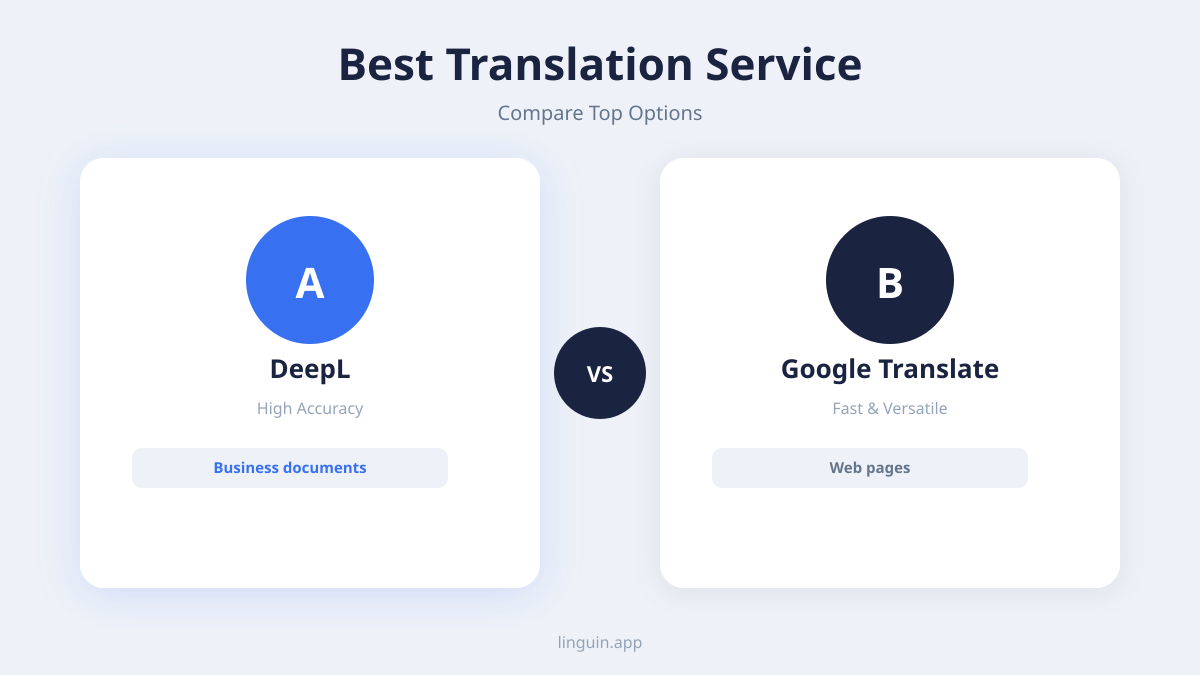
- Machine Translation: If relying on MT, consider the underlying technology. Tools like Linguin, powered by advanced NMT, continuously learn and improve, offering higher accuracy for a broader range of texts than generic free translators.
Confidentiality and Security
If your documents contain sensitive personal, business, or proprietary information, security is paramount.
- Professional Agencies: Reputable agencies will have robust data security measures, non-disclosure agreements (NDAs), and clear privacy policies.
- Machine Translation Tools: Be extremely cautious with free online MT services. They may use your data for training or have less stringent privacy controls. Services like Linguin, designed for professional use across macOS, iOS, and browser extensions, often prioritize user data security and offer enterprise-grade solutions for sensitive content.
Turnaround Time and Scalability
Your project timeline will dictate the speed required.
- Urgent Translations: For immediate needs, NMT or PEMT are your best bets.
- Large Projects: If you have a massive volume of documents, you’ll need a service that can scale efficiently. This often involves a combination of MT and human resources.
- Standard Turnaround: For less urgent but important documents, human translation offers a good balance of quality and reasonable delivery times.
Cost and Budget
Translation costs can vary wildly.
- Machine Translation: Generally the cheapest, especially for personal use.
- PEMT: Offers a mid-range solution, balancing cost and quality.
- Human Translation: The most expensive, but often the most justifiable for critical content.
When evaluating cost, consider not just the per-word rate but also the value you’re receiving. A cheap translation that requires extensive revisions or leads to costly mistakes is no bargain.
Technology and Integration
In the digital age, how a translation service integrates into your workflow can be a significant advantage.
- Desktop and Mobile Apps: Tools that offer dedicated apps for macOS and iOS, like Linguin, allow for seamless translation of documents, emails, and web content directly from your devices.
- Browser Extensions: For translating web pages or online documents instantly, Chrome and Safari extensions are invaluable.
- API Integration: For businesses needing to automate translation within their own software or platforms, API access is crucial.
Leveraging AI for Enhanced Document Translation
Artificial intelligence is no longer a futuristic concept; it’s a present-day reality that’s revolutionizing document translation. As mentioned, Neural Machine Translation (NMT) has made significant strides. However, the evolution doesn’t stop there. AI-powered translation services are offering features that go beyond simple text conversion.
Linguin, for instance, is built on advanced AI that continuously learns and refines its translation capabilities. This means that over time, the accuracy and naturalness of its translations improve. For users of Linguin across macOS, iOS, Chrome, and Safari, this translates into a more reliable and efficient translation experience. Imagine:
- Instantaneous Translation of Any Document: Whether you’ve received a PDF report via email on your Mac, a contract draft on your iPhone, or are browsing a website on Safari, Linguin’s integrated solutions allow you to translate them with a few clicks.
- Contextual Awareness: Advanced NMT models, like those powering Linguin, are better at understanding the context of sentences and paragraphs, leading to more coherent and accurate translations, especially for longer documents.
- Customization and Learning: Some AI platforms can be trained on specific glossaries or industry-specific terminology, further enhancing accuracy for specialized content. While core NMT is powerful, the ability for a tool to adapt is a significant advantage.
- Multimodal Translation: Future AI solutions might even handle visual elements within documents, translating text embedded in images or charts.
The key takeaway is that AI isn’t just about replacing human translators entirely; it’s about augmenting their capabilities and providing faster, more accessible, and increasingly accurate translation for a wider range of needs. For everyday documents, quick understanding of foreign language articles, or even drafting initial translations that will be polished by a human expert, AI-powered tools are becoming indispensable.
How Linguin Enhances Your Document Translation Workflow
At Linguin, we understand the diverse needs of our users. Our AI-powered translation app for macOS, iOS, Chrome extension, and Safari extension is designed to provide a seamless and highly effective document translation experience.
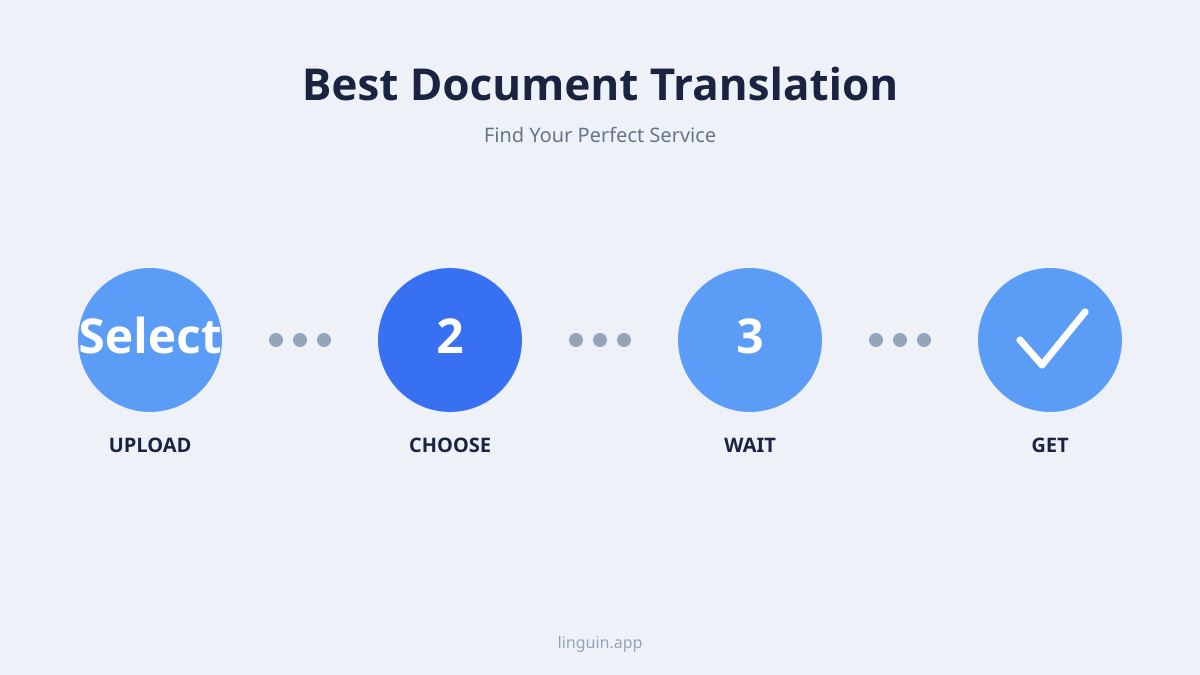
For macOS and iOS users: Our native applications allow you to translate documents directly from your desktop or mobile device. Simply upload a document, select your languages, and receive a high-quality translation. This is perfect for translating research papers, business proposals, or personal correspondence on the go. The power of advanced NMT is at your fingertips, offering speed and accuracy that keeps your workflow uninterrupted.
For Chrome and Safari users: Our browser extensions are designed for instant web-based translation. Reading a foreign news article, researching international suppliers, or navigating a non-English website? With a single click, Linguin translates the entire page or selected text, making global information accessible without leaving your browser. This is incredibly useful for quickly grasping the gist of foreign language documents encountered online.
What sets Linguin apart is our commitment to providing accurate, fast, and secure translations. We leverage the latest advancements in AI to ensure that our translations are not only linguistically correct but also contextually relevant. For users who require an elevated level of service, Linguin offers robust solutions that prioritize your data privacy, making it a trusted choice even for sensitive documents.
Making Your Final Decision
Choosing the best document translation service boils down to a clear understanding of your requirements and a thorough evaluation of potential providers.
- Define Your Needs: What kind of document is it? How critical is perfect accuracy? What’s your budget and deadline?
- Prioritize Accuracy: For legal, medical, or business-critical documents, invest in professional human translation or high-quality PEMT.
- Consider Security: For confidential information, ensure the provider has strong data protection measures.
- Evaluate Technology: Look for services that integrate well with your existing tools and devices. AI-powered solutions like Linguin offer significant advantages in speed and evolving accuracy.
- Request Samples/Trials: If possible, test the service with a small, representative sample of your document before committing to a large project.
The landscape of document translation is constantly evolving, with AI playing an increasingly significant role. By understanding the options and carefully considering your specific needs, you can confidently select a service that empowers your global communication and ensures your documents speak volumes, no matter the language. Whether you opt for pure human expertise, a hybrid approach, or the cutting edge of AI-driven translation with tools like Linguin, the goal remains the same: clear, accurate, and effective communication across borders.