So, you want to learn Japanese. The allure is undeniable—from the rich culture and history to the world of anime, manga, and nuanced business communication. But the journey can seem daunting. Three writing systems? A grammar structure that feels backwards? It’s easy to feel overwhelmed before you even start.
The good news is that learning Japanese fast isn’t about cramming for 10 hours a day until you burn out. It’s about learning smart. It’s about strategic focus, consistent exposure, and using the right tools to make the language a natural part of your life. This guide will provide you with a clear, actionable roadmap to accelerate your Japanese learning journey, whether your goal is conversational fluency, reading your favorite manga, or preparing for a trip to Tokyo.
Laying the Foundation: Setting Up for Speed
Before you dive into vocabulary lists, the most critical step is to define your “why” and your “what.” A vague goal like “I want to learn Japanese” is a recipe for slow progress and eventual abandonment.
Define Your “North Star” Goal: Be specific. Is it to hold a 30-minute conversation with a native speaker? To read a short novel or a specific manga without constant dictionary lookups? To pass the JLPT N5 or N4 exam? A clear target dictates everything you do. For example, if your goal is conversational fluency, you’ll prioritize speaking and listening practice over memorizing thousands of kanji for academic reading.
Embrace the “Minimum Effective Dose”: Consistency trumps marathon sessions. It’s far more effective to study for 30 focused minutes every day than to binge for 5 hours on Saturday. Your brain consolidates memory during sleep, so daily exposure, even in small doses, builds stronger neural pathways. Use habit-stacking: practice your kana while your morning coffee brews, listen to a podcast during your commute, review flashcards on your lunch break.
Master the Kana, Immediately: Hiragana and Katakana are your non-negotiable first step. These two phonetic syllabaries (46 characters each) are the bedrock of the language. Dedicate a week or two to mastering them completely—reading and writing. Use mnemonics, apps like Tofugu’s “Learn Kana” quiz, or good old-fashioned pen and paper. Do not move on to other materials until you can read kana without hesitation. This single step will exponentially increase your learning speed for everything that follows.
Core Strategies for Rapid Acquisition
With your foundation set, it’s time to implement high-impact learning strategies. This is where you move from theory to practice.
Sentence Mining & Contextual Learning: Stop learning words in isolation. Instead, learn vocabulary and grammar through complete sentences. When you encounter a new word, save the entire sentence it came from. This teaches you not only the meaning but also the natural usage, collocations, and grammatical structure. Use a digital flashcard system like Anki to review these sentence cards. For instance, instead of memorizing “食べる (taberu) = to eat,” learn a card with the sentence: “私は朝ごはんにパンを食べます。 (I eat bread for breakfast.)”
Prioritize High-Frequency Input: Not all Japanese is created equal. Focus on the most common words and grammar points first. The 1000 most frequent words will cover around 70-80% of spoken language. Resources like the “Core 2k/6k” Anki decks or frequency dictionaries are invaluable here. Similarly, tackle essential grammar with a structured guide like Tae Kim’s Guide to Japanese or the Genki textbook series. This ensures every hour of study gives you the maximum return on investment.
Immersion from Day One: You don’t need to live in Japan to immerse yourself. Create a “Japanese bubble” around your digital life. Change your phone and social media language to Japanese. Follow Japanese accounts on Twitter or Instagram. Watch Japanese TV shows, anime, or YouTube channels on topics you already enjoy (cooking, gaming, tech). At first, you’ll understand almost nothing, and that’s okay. The goal is to train your ear to the sounds, rhythms, and cadence of the language. Over time, you’ll start to pick out words you know, then phrases, then entire sentences. Tools like Linguin can be a powerful ally here. When you’re reading a Japanese website or article in Chrome or Safari, the Linguin extension can provide instant, seamless translations for unfamiliar words or phrases, allowing you to read more complex material earlier in your journey without constant tab-switching to a dictionary.
Speaking from the Start (Shadowing): Don’t wait until you’re “ready” to speak. A powerful technique called “shadowing” can accelerate your pronunciation and intonation. Listen to a short, clear audio clip (from a textbook or a beginner podcast) and try to repeat it exactly as you hear it, with as little delay as possible. Mimic the sounds, the pitch accent, the emotion. It feels awkward at first, but it directly wires your brain and mouth to produce natural Japanese sounds. Even 10 minutes a day of this practice is incredibly effective.

Conquering the Kanji Mountain
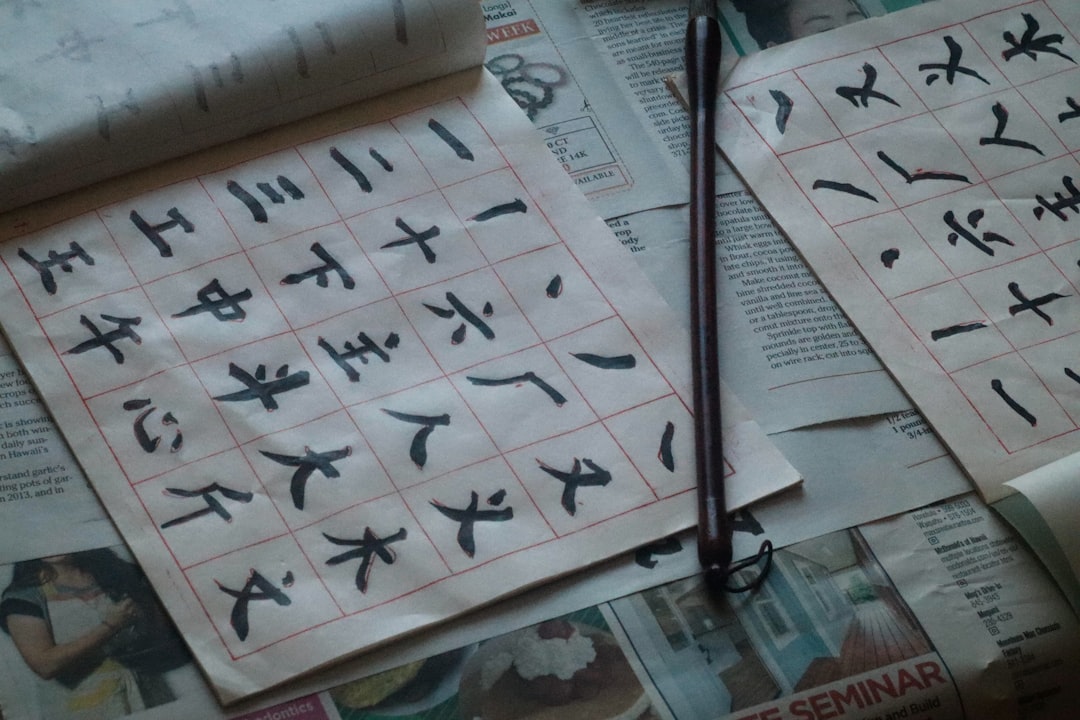
Kanji, the logographic characters borrowed from Chinese, are often the biggest psychological hurdle. The key is to stop seeing them as random drawings and start seeing them as systems of meaning.
Learn Radicals First: Kanji are built from smaller components called radicals. Learning the most common 50-100 radicals (like 水 for water, 言 for speech, 心 for heart) gives you a toolkit. When you encounter a new kanji like 泳 (to swim), you can see it’s made of 水 (water) + 永 (eternity). This creates a memorable story (“eternity in the water” = swimming) and helps distinguish similar-looking characters.
Use a Structured Method: The “Remembering the Kanji” (RTK) method by James Heisig is famous for teaching the meaning and writing of 2,200+ kanji through imaginative stories, without focusing on readings initially. Alternatively, the “Kodansha Kanji Learner’s Course” integrates meanings, readings, and vocabulary. Choose one method and stick with it consistently. The goal is to build a mental “filing system” so that every new kanji has a logical place to go.
Learn Kanji Through Vocabulary: Ultimately, kanji are meaningless without words. Always tie a kanji to specific vocabulary words. For the kanji 食 (eat), learn words like 食べる (to eat), 食事 (meal), 食堂 (dining hall). This connects the abstract character to concrete usage and sound.
Tools and Technology to Turbocharge Your Learning
The right tools can remove friction and make practice effortless. Here’s a modern learner’s toolkit:
- Spaced Repetition Systems (SRS): Anki is the gold standard. It schedules your reviews so you see information just before you’re about to forget it, making memorization incredibly efficient.
- Comprehensive Learning Platforms: Apps like Bunpro (for grammar SRS), WaniKani (for kanji), or Duolingo (for daily habit-building) provide structured paths.
- Instant Translation & Reading Aids: This is where a tool like Linguin shines. As you progress and start trying to read real Japanese websites, news articles, or blogs, you’ll hit constant roadblocks. The Linguin Mac app and Chrome extension allow you to hover over or select text for instant, context-aware translations. This maintains your reading flow and helps you decipher longer passages without breaking immersion. It’s like having a patient tutor looking over your shoulder, ready to help only when you ask.
- Language Exchange: Platforms like iTalki or HelloTalk connect you with native speakers for conversation practice. Schedule regular sessions, even just once a week. Preparing for these sessions (thinking of topics, questions) is in itself powerful study.
Building a Sustainable Practice

Speed is useless without sustainability. Avoid burnout by making Japanese enjoyable.
Track Your Progress: Keep a simple journal or log. Note what you studied each day. Seeing your streak build is motivating, and on days you feel stuck, looking back at how far you’ve come is a powerful boost.
Consume Content You Love: This is the most important rule. If you like cooking, watch Japanese cooking shows. If you love video games, play them in Japanese. Read manga about your favorite hobbies. When you’re engaged with the content, the learning happens naturally. For more on this approach, check out our guide on using media for language learning.
Be Kind to Yourself: You will have plateaus. You will forget words you “knew.” This is a normal part of the process, not a sign of failure. Celebrate small wins—understanding a full sentence in a song, reading a street sign in a video, having a simple exchange with a language partner.
Learning Japanese fast is a marathon run as a series of strategic sprints. It requires clarity of purpose, smart methods that focus on high-yield material, and the consistent, daily application of those methods. By combining core strategies like sentence mining and shadowing with modern tools that reduce friction, you can integrate Japanese into your life and make remarkable progress. Remember, the goal isn’t perfection—it’s communication and connection. 頑張って! (Ganbatte! — Do your best!) Your journey to speaking Japanese starts now, one smart step at a time.