 English
  Español
  Français
  Deutsch
  Português
  Italiano
  Русский
  中文(简体)
  日本語
日本語  한국어
한국어  العربية
  हिन्दी
  Nederlands
  Türkçe
  Polski
If you have used a translation app in the last five years, you have been using neural machine translation. It powers Google Translate, DeepL, Apple Translate, and Linguin. Most users have no idea what the technology is or why it produces output that is so much better than the clunky translation software that came before it.
This article explains neural machine translation from the ground up — what it is, how it works, why it matters, and what it means for the translation tools you use every day. No machine learning background required.
The Problem Translation Systems Had to Solve
Human language is not a code where every word in one language maps to a corresponding word in another. Words have multiple meanings depending on context. Sentence structure differs radically across languages. Some concepts exist in one language and have no equivalent in another. Idioms mean something entirely different from what their component words would suggest.
Early computer translation systems tried to handle this with explicit rules. Linguists would write thousands of grammar rules and word mappings: if this French noun appears in this grammatical position, use this English equivalent, then apply this transformation. The systems were brittle. Languages have too many exceptions, too much context-dependence, and too much idiomatic variation for any finite rule set to capture.
Statistical translation systems improved on rule-based approaches by learning patterns from large collections of parallel texts — documents that existed in both a source and target language, like European Parliament proceedings published in 24 languages. The statistical approach was better than rules, but it translated short phrases in isolation without understanding how meaning changed across longer sentences. The output was often technically correct word-by-word but incoherent as a whole.
Neural machine translation replaced both approaches with something fundamentally different: a neural network that learns to translate by processing enormous amounts of text and developing an internal representation of how meaning maps across languages.
The Core Idea: Encoding Meaning, Then Decoding It
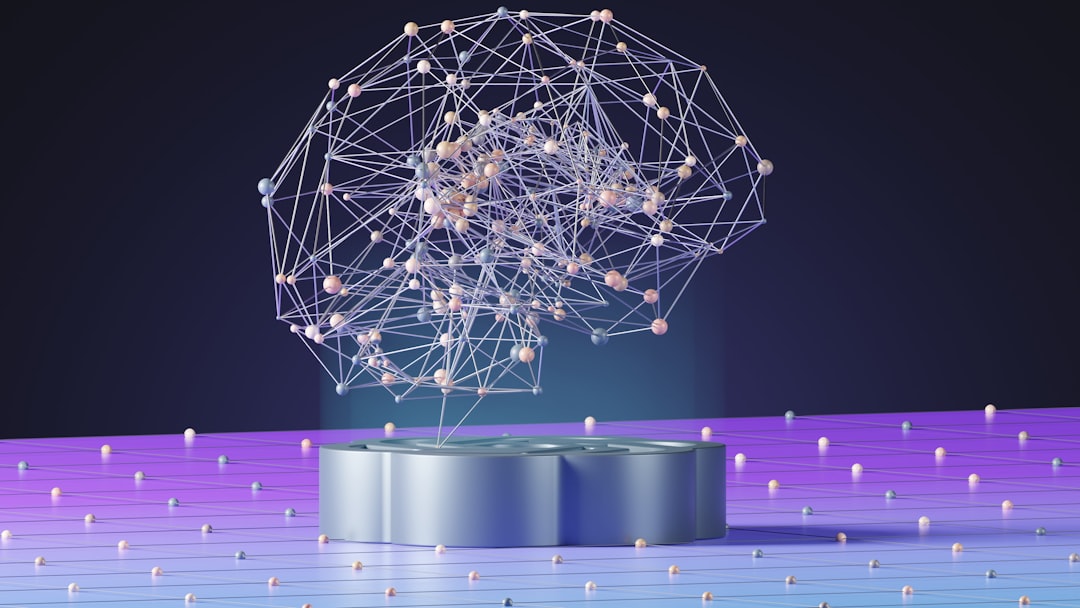
The original neural machine translation architecture has two components working in sequence:
The encoder reads the entire source sentence — say, a sentence in Spanish — and converts it into a dense numerical representation. Think of this as a compressed mathematical summary of the meaning of the sentence. The encoder does not produce any translated output; it just builds a rich internal representation of what the input means.
The decoder takes that internal representation and generates the output sentence in the target language, one word at a time. Each word it produces depends on both the encoded source meaning and the words it has already produced.
The crucial advance over statistical translation was that the encoder processes the entire source sentence as a unit before translation begins. The system is not translating word-by-word or phrase-by-phrase in sequence; it is understanding the full sentence first, then expressing that understanding in another language.
The Attention Mechanism: Looking Back at the Right Words
The encoder-decoder architecture solved the holistic understanding problem but introduced a new one: compressing an entire sentence into a single fixed-size numerical vector discards information. For short sentences, this was manageable. For long sentences — the kind that appear in legal documents, technical writing, and literary prose — important details got lost.
The attention mechanism, introduced in research in 2015, solved this. Rather than relying on a single compressed vector, the decoder is allowed to look back at different parts of the encoded source sentence as it generates each word of the output. When generating the English word “bank,” the model can attend to whether the surrounding Spanish words indicate a financial institution or a riverbank. When generating a pronoun, it can attend to the noun it refers to earlier in the sentence.
Attention transformed neural machine translation’s performance on complex, long sentences. The output became coherent across paragraphs rather than just within individual sentences.
Transformers: The Architecture Behind Modern Translation
In 2017, researchers published the Transformer architecture — a model design that relies entirely on attention mechanisms, processing the full sequence in parallel rather than token by token. This design enabled training on vastly more data far more efficiently than any previous approach.
Every major translation system today — including the models powering Linguin — is based on the Transformer architecture scaled up with more parameters, more training data, and architectural refinements developed over the years since the original paper.
What distinguishes the best modern translation models is not just scale but training approach. Models fine-tuned on domain-specific data translate technical content better than general-purpose models. Models trained with human feedback are better calibrated on naturalness and register. Models that process longer context windows maintain coherence better over multi-paragraph documents.

Why Neural Translation Sounds More Natural

The improvement from statistical to neural translation is most striking in output naturalness. Statistical translation produced sentences that were often technically correct at the word level but unnatural as prose — the kind of output that reads like it was translated by a machine.
Neural translation produces output that reads like it was written by a person. The reasons:
Context-awareness. The model understands that “cold” in “cold weather” and “cold” in “cold treatment” call for different translations based on surrounding context. Statistical systems translated “cold” based on frequency statistics; neural systems translate it based on meaning.
Grammatical coherence. Neural models maintain agreement across entire sentences. When a subject requires a particular verb form several words later, the model handles it correctly because it processes the full sentence as a unit.
Idiomatic output. The model has been trained on natural human writing and produces natural human writing. Rather than rendering each phrase according to rules and stitching the results together, it generates output directly, and that output sounds like it was written rather than assembled.
Register sensitivity. Modern neural models distinguish formal, informal, technical, and casual registers and match the register of the source text in the translation. A formal legal clause translates to formal target-language prose; a casual social media post translates to casual target-language prose.
How This Applies to Linguin
Linguin uses large-scale Transformer models optimized for the content types users actually translate: web pages, news, documents, correspondence, and research. The model pipeline includes context from surrounding sentences when translating within documents, which is why long-form translation in Linguin reads more coherently than tools that translate sentence by sentence.
The technology is continuously updated. Translation model quality has improved every year since neural approaches became dominant, and the pace of improvement has not slowed. What Linguin uses today is materially better than what was available two years ago, and the models running two years from now will be materially better again.
The practical implication for users is that the translation you get from an AI-powered tool today is fundamentally different in quality from what “machine translation” meant historically. The stigma of robotic, untrustworthy output comes from a previous generation of technology. Neural machine translation has moved the bar to the point where, for a broad range of everyday content, the output is genuinely good.
For a detailed look at how accurate modern AI translation is across languages and content types, see our 2026 AI translation accuracy guide. For practical applications — including how to use these tools for language learning — see our guide to learning languages with an AI translator.