 English
  Español
  Français
  Deutsch
  Português
  Italiano
  Русский
  中文(简体)
  日本語
日本語  한국어
한국어  العربية
  हिन्दी
  Nederlands
  Türkçe
  Polski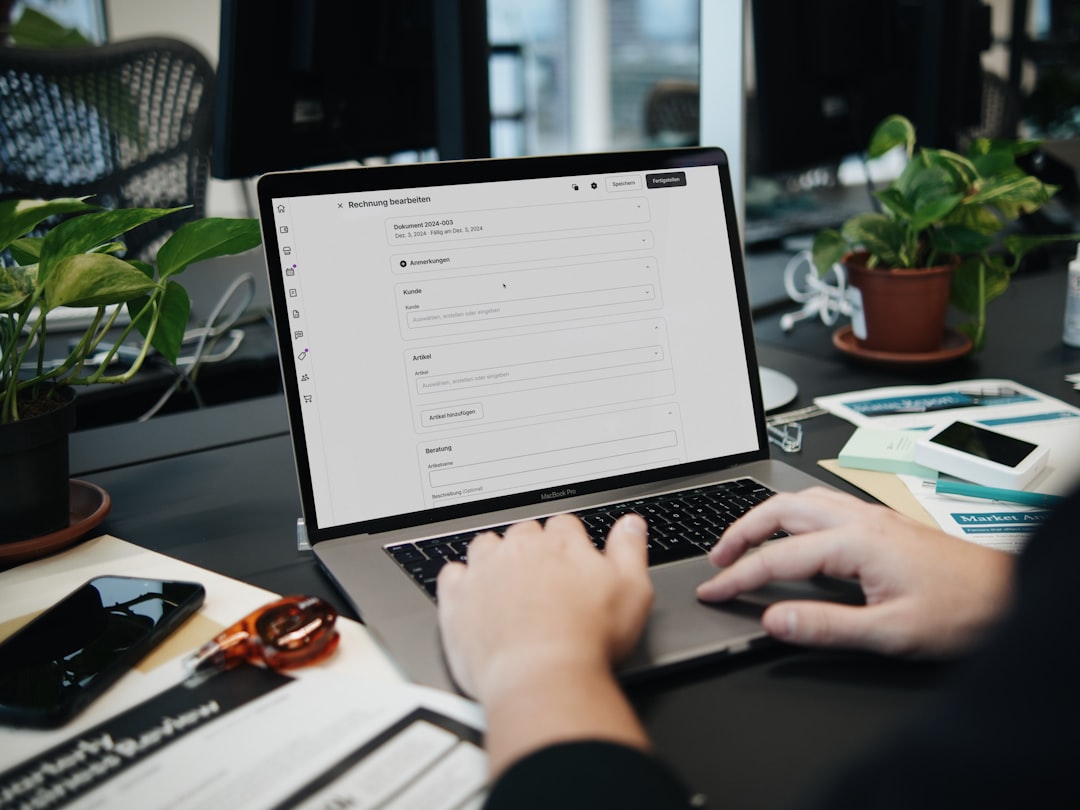
You write a perfectly polished email in English, run it through a translation tool, and send it to your German client. Three days of silence. When you finally connect on a call, they mention — carefully, diplomatically — that the email felt a bit abrupt.
The translation was technically correct. Every word matched. But the tone was wrong, the formality was off, and the greeting that works in English reads as brusque in German business culture. The message arrived. The relationship took a small hit.
This happens more often than people realize, and it is entirely avoidable. Here is what professional email translation actually requires — and how modern AI tools handle it.
Why Email Translation Is Harder Than It Looks
Email sits in a narrow zone between formal written communication and conversational exchange. It is more structured than a chat message, less rigid than a contract. That balance is different in every language and every business culture.
German business email follows strict formality conventions. “Mit freundlichen Grüßen” (literally “with friendly greetings”) is the standard close — equivalent to “Kind regards” — and dropping it or replacing it with something casual signals carelessness. The subject line is factual and specific. The body is direct and structured. Small talk before the main point is acceptable in longer relationships but unusual in cold outreach.
Japanese business email operates on an entirely different axis. The convention is to open by acknowledging the season, thanking the recipient for their continued relationship, and situating the email before making any request. Skipping this preamble and jumping to the point — which is efficient in English — comes across as rude.
Spanish business email varies dramatically by region. An email that works perfectly in Spain can feel too stiff or too casual in Mexico or Colombia, depending on the industry and relationship history.
None of this is captured by a word-for-word translation. The words may be correct while the register, structure, and cultural framing are entirely wrong.
The Four Elements a Good Email Translation Must Get Right
1. Formality Level
Every language encodes formality differently. English has limited formal/informal markers — mostly word choice. French has “tu” versus “vous.” German has “du” versus “Sie,” and the choice carries significant social weight in professional contexts. Japanese has entire grammatical registers — different verb endings, different vocabulary sets — depending on the relationship hierarchy.
A translation tool that collapses all incoming English into a single formality level will produce correct words in the wrong register. For business email, defaulting to formal is usually safer. But even “formal” is not a single setting — a formal email to a long-term partner reads differently than a formal email to a new contact.
2. Idioms and Fixed Phrases
Business English is full of idioms that do not translate. “Let’s circle back on this,” “keeping you in the loop,” “moving the needle,” “bandwidth” as a metaphor for capacity — these are phrases that native English speakers use without noticing they are idioms. Machine translation that encounters them has two options: translate literally (producing nonsense) or recognize the idiom and substitute the equivalent in the target language.
Modern AI translation handles common business idioms well, because they appear frequently enough in training data. Newer slang, company-specific jargon, or unusual idiom combinations still cause problems. The practical rule: if a phrase would confuse a non-native English speaker, it will probably cause problems in translation.
3. Email Structure Conventions
The expected structure of a business email varies. In English, the common pattern is: brief opening, main point, supporting detail, next steps, close. That is not universal.
French business communication often spends more time on courteous framing before reaching the point. A French “Madame, Monsieur” opening, followed by a sentence acknowledging the previous exchange, before stating the purpose is not padding — it is convention. Skipping it signals unfamiliarity with professional norms.
A translation that converts the text but ignores the structural expectations of the target language produces something that is readable but feels slightly off to a native reader. For truly professional email translation, it sometimes makes sense to restructure the email in addition to translating it.
4. Cultural Context in Greetings and Closings
The opening and closing of an email carry disproportionate weight. They signal respect, relationship status, and cultural familiarity. They are also the part of the email most likely to go wrong in translation.
“Dear [First Name]” works in most English-speaking business contexts. In German, opening with the first name signals an existing close relationship. “Sehr geehrte Frau [Last Name]” (Very esteemed Ms. [Last Name]) is the standard formal opening. Translating “Dear Sarah” as “Liebe Sarah” in a first-touch business email would be a significant social misstep.
Japanese closings are even more specific. “よろしくお願いします” (Yoroshiku onegaishimasu) is a standard polite closing phrase that has no direct English equivalent — it roughly means “I humbly request your favorable consideration” — and it appears in nearly every business email. Knowing to include it, and in what context, requires cultural knowledge beyond the language.
How AI Translation Handles Professional Email
The capability gap between older machine translation and current AI models is most visible in exactly the areas that matter for professional email.
Formality detection is now standard in leading AI translation tools. When you paste a formally structured email, the output mirrors that register in the target language. Linguin, DeepL, and Google Translate all handle common formality signals well. For languages with strong formal/informal distinctions like German, French, or Japanese, the tools recognize the cues and apply the appropriate register.
Idiomatic substitution has improved substantially. AI models trained on large corpora of naturally occurring text have seen business idioms in context enough times to produce natural target-language equivalents rather than literal translations. “Let me know if you have any questions” becomes the natural equivalent in each language — not a word-for-word rendering.
Cultural conventions are the remaining gap. AI translation tools translate the text; they do not restructure the email for the target culture’s conventions. You will not get a prompt that says “this email doesn’t include the expected seasonal opening for Japanese business correspondence.” That gap is still a human judgment call.
The practical workflow for professional email translation is therefore: translate with AI, then review for cultural conventions specific to the target market. For languages and markets you work with regularly, building a short checklist of conventions — common greetings, expected structure, specific closing phrases — takes an hour and saves recurring problems.
A Practical Workflow for Professional Email Translation
Step 1: Draft in your language. Write clearly and avoid idioms where possible. Clear, direct prose translates better than figurative language.
Step 2: Translate with a current AI tool. Linguin, DeepL, and Google Translate all produce usable output for common high-resource language pairs. For critical emails, try two tools and compare.
Step 3: Review tone and formality. Read the translation aloud (or have a native speaker read it). Does the formality match the relationship? Does the opening sound right?
Step 4: Check the opening and closing. These are the highest-risk elements. If you are not sure what the expected greeting and closing are for the target culture, a quick search or asking a native speaker takes a few minutes.
Step 5: Send. The combination of AI translation and a light human review catches the vast majority of problems.
Which Languages Need the Most Care
Some language pairs and cultural contexts require more attention than others:
German — High-stakes formality conventions. The distinction between “du” and “Sie” is important. Formal closings are expected. Worth extra attention on the opening and closing.
Japanese — Most structurally different from English email conventions. The expected preamble and specific closing phrases are not optional in formal business contexts.
Arabic — Strong formality conventions and right-to-left text direction. Email to Gulf business contacts may expect more relationship-oriented framing before stating a request.
French — More formal than English in business contexts, with specific greeting and closing conventions. “Cordialement” (Cordially) is a safe close; “Amicalement” (Friendly) is too casual for most business email.
Spanish — High variation across regions. What works in Spain may not work in Latin America. If you are targeting a specific market, regional conventions matter.
For the high-resource pairs — English to Spanish, French, German, Portuguese — AI translation quality is high enough that the main risk is cultural convention, not translation accuracy. For lower-resource language pairs, it is worth a native speaker review for critical communication.
When to Get a Human Translator
For most professional email — client correspondence, partner communication, vendor outreach — AI translation with a light review is sufficient. The cases where you should invest in professional human translation:
- Legal correspondence where the exact wording has contractual weight
- Communications to senior officials or in highly formal institutional contexts
- Anything where a mistake would be embarrassing or costly
- Email campaigns to large audiences where the quality represents your brand at scale
The rule is proportionality. The higher the stakes and the wider the audience, the more value a professional translator adds. For everyday business email, AI tools have reached a standard that is entirely adequate.
Making It Part of Your Workflow
The teams that handle multilingual email most smoothly do not think about translation as an extra step. They have built it into their workflow.
That means having a go-to tool (Linguin works well for this — the interface is fast enough that translation does not interrupt the flow of writing), knowing the core conventions for the markets they regularly communicate with, and spending two or three minutes on review rather than an ad-hoc process each time.
The upfront investment is small. The payoff is email that arrives the way you intended it to — not just in the correct language, but in the right register, with the right tone, framed the way the recipient expects professional communication to be framed.
For a broader look at how AI handles different types of content translation, see our AI translation accuracy guide.