 English
  Español
  Français
  Deutsch
  Português
  Italiano
  Русский
  中文(简体)
  日本語
日本語  한국어
한국어  العربية
  हिन्दी
  Nederlands
  Türkçe
  Polski
The World is Your Oyster, But Can Your Customers Speak Your Language?
In today’s interconnected global marketplace, businesses have unprecedented opportunities to reach customers far beyond their geographical borders. However, this expansion comes with a crucial challenge: language. If your customer support is limited to a single language, you’re inherently putting up a barrier, potentially alienating a significant portion of your target audience. Implementing robust multilingual customer support isn’t just a nice-to-have; it’s a strategic imperative for any business aiming for true global reach and sustained growth.
Think about it from a customer’s perspective. When a user encounters an issue, their immediate need is clear communication and efficient resolution. If they have to struggle through a support interaction in a language they’re not fluent in, frustration is almost guaranteed. This can lead to negative reviews, lost sales, and a damaged brand reputation. Conversely, providing support in their native tongue fosters trust, builds loyalty, and creates a positive customer experience that can differentiate you from the competition.
The benefits of multilingual customer support extend far beyond simply answering questions. It demonstrates a commitment to understanding and valuing your diverse customer base. This inclusivity can be a powerful differentiator, attracting customers who might otherwise choose a competitor with more accessible support. Furthermore, by breaking down language barriers, you open up new markets, allowing you to tap into previously inaccessible customer segments and drive significant revenue growth.
Bridging the Language Gap: Key Strategies for Success
Implementing multilingual customer support might seem daunting, but with a strategic approach, it can be achieved effectively. The first step is to understand where your existing and potential customers are located and what languages they speak. Analyzing your current customer data, website traffic, and market research can provide valuable insights into the most critical languages to prioritize. Don’t feel pressured to support every single language from day one. Start with the most impactful ones and gradually expand your offerings.
Once you’ve identified your target languages, you need to determine the best way to deliver support in those languages. This can involve a multi-pronged approach. One common strategy is to hire native-speaking support agents. While this is the gold standard for providing nuanced and culturally sensitive support, it can be resource-intensive, especially for smaller businesses. Consider a phased approach: begin with dedicated agents for your top languages and explore other solutions for less frequently requested languages.
Another effective strategy is to leverage technology. AI-powered translation tools have become incredibly sophisticated, offering near real-time translation that can significantly enhance your support capabilities. This is where applications like Linguin for macOS, iOS, and browser extensions can be a game-changer. Imagine a customer support agent using Linguin to instantly translate incoming chat messages or emails from a customer who speaks a different language. This allows them to understand the query and respond effectively, without the need for a human translator for every interaction.
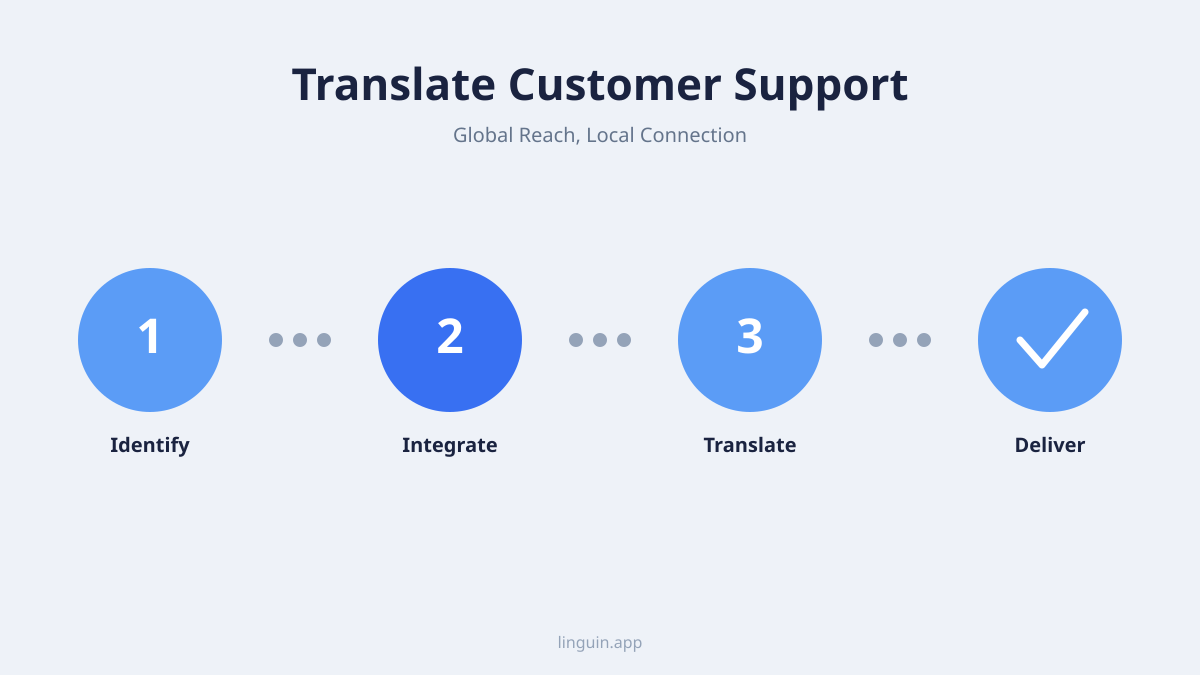
Furthermore, creating a comprehensive knowledge base or FAQ section in multiple languages can empower customers to find answers to common questions independently. This not only reduces the burden on your support team but also caters to customers who prefer self-service options. Ensuring your website and product documentation are also localized into your target languages is another crucial step in creating a truly seamless multilingual experience.
The AI Advantage: How Linguin Empowers Your Support Team
In the realm of multilingual customer support, artificial intelligence is no longer a futuristic concept; it’s a present-day necessity. AI-powered translation tools, like Linguin, are revolutionizing how businesses interact with their global customer base. Linguin’s advanced natural language processing capabilities ensure that translations are not only accurate but also contextually relevant, preserving the nuance and intent of the original message.
For your customer support agents, Linguin can be integrated into their workflow to provide instant translation of customer inquiries. Whether it’s an email, a chat message, or even spoken communication that needs to be transcribed and translated, Linguin can handle it. This means your agents can communicate effectively with customers in languages they don’t speak, fostering positive interactions and leading to faster resolutions. The Linguin app for macOS and iOS provides this functionality directly on their devices, allowing for on-the-go support.
The Linguin Chrome and Safari extensions are particularly useful for customer support teams who often work within web-based ticketing systems or live chat platforms. These extensions can seamlessly translate web content, including customer messages, directly within the browser window. This eliminates the need to copy and paste text into separate translation tools, saving valuable time and reducing the potential for errors. Imagine a support agent receiving a query in Spanish via live chat. With the Linguin extension, the message appears in English on their screen in real-time, and their response can be translated back into Spanish before being sent.
Beyond direct translation, AI can also assist in analyzing customer sentiment across different languages. This can provide valuable insights into how different customer segments perceive your brand and products, allowing you to tailor your support strategies accordingly. By understanding common pain points expressed in various languages, you can proactively address issues and improve your overall customer experience.
Building Trust and Loyalty Through Language
The impact of effective multilingual customer support on customer trust and loyalty cannot be overstated. When customers feel understood and valued, they are more likely to remain loyal to your brand. Providing support in their native language is a powerful demonstration of this commitment. It shows that you’ve gone the extra mile to accommodate their needs, fostering a sense of connection and appreciation.
Consider a scenario where a customer encounters a technical issue with your software. If they can explain their problem clearly and receive a detailed, accurate response in their own language, their anxiety is immediately reduced. They feel confident that their issue is being taken seriously and that a solution is within reach. This positive experience can transform a potentially negative situation into an opportunity to solidify customer loyalty.
Conversely, forcing customers to navigate language barriers can breed resentment and distrust. If they struggle to get their point across or receive a poorly translated, nonsensical response, they will quickly lose faith in your ability to support them. This can lead to churn, negative word-of-mouth, and a damaged brand image.
Investing in multilingual customer support is an investment in your customer relationships. It’s about building bridges, not walls, and ensuring that every customer, regardless of their linguistic background, feels heard, understood, and valued. This dedication to inclusivity is a cornerstone of building a truly global and successful business.
Overcoming Challenges and Measuring Success
While the benefits are clear, implementing multilingual customer support does present its own set of challenges. These can include the cost of hiring multilingual staff, ensuring consistency in messaging across different languages, and managing the technical infrastructure for translation. However, as we’ve discussed, AI-powered tools like Linguin can significantly mitigate many of these challenges by automating and streamlining the translation process.
Measuring the success of your multilingual customer support initiatives is crucial. Key performance indicators (KPIs) to track can include:
- Customer Satisfaction (CSAT) Scores: Compare CSAT scores for customers who received support in their native language versus those who did not.
- Net Promoter Score (NPS): Gauge customer loyalty and their willingness to recommend your brand across different language segments.
- Resolution Time: Analyze if providing support in the customer’s native language leads to faster issue resolution.
- Support Ticket Volume by Language: Understand the demand for support in different languages to optimize resource allocation.
- Customer Retention Rates: Track how multilingual support impacts customer retention across diverse linguistic groups.
- International Sales Growth: Correlate the expansion of multilingual support with increased sales in new international markets.
Regularly reviewing these metrics will allow you to refine your strategies, identify areas for improvement, and demonstrate the tangible return on investment of your multilingual customer support efforts.
The Future is Multilingual
The global marketplace is only becoming more diverse, and the demand for personalized, accessible customer experiences will only continue to grow. Businesses that embrace multilingual customer support are not just adapting to the current landscape; they are positioning themselves for future success. By breaking down language barriers, you unlock new markets, foster deeper customer loyalty, and build a more inclusive and resilient brand.
Tools like Linguin are making this aspiration more attainable than ever before. With its intuitive interface and powerful AI translation capabilities, Linguin empowers businesses of all sizes to connect with their global customers on a more personal level. Whether you’re a startup looking to expand internationally or an established enterprise seeking to enhance your existing global operations, investing in multilingual customer support, powered by intelligent solutions like Linguin, is a strategic move that will pay dividends for years to come. Don’t let language be a barrier to your global ambitions. Start building those bridges today.