 English
  Español
  Français
  Deutsch
  Português
  Italiano
  Русский
  中文(简体)
  日本語
日本語  한국어
한국어  العربية
  हिन्दी
  Nederlands
  Türkçe
  Polski
The internet has shrunk the world, connecting us to people and cultures from every corner of the globe. Social media, in particular, has become our digital town square, a place where ideas, trends, and friendships transcend geographical boundaries. But what happens when your feed is a mosaic of languages, or when you want to engage with someone whose native tongue isn’t yours? The language barrier can quickly turn a vibrant global conversation into a frustrating dead end.
Fear not, digital explorers! This guide is your roadmap to breaking down those linguistic walls and fostering genuine connections across cultures. We’ll explore the nuances of translating social media content, from quick snippets to entire profiles, and show you how to leverage the power of AI to make every post accessible. Whether you’re a marketer looking to expand your reach, a traveler wanting to connect with locals, or simply a curious soul eager to understand diverse perspectives, translating social media posts is no longer a daunting task.
The Ever-Expanding Universe of Social Media Languages
Think about your daily social media scroll. You might see posts from friends in their native language, news articles shared from international sources, or even advertisements tailored to global audiences. Platforms like Twitter (now X), Instagram, Facebook, TikTok, and LinkedIn are global hubs, hosting billions of users who communicate in thousands of different languages.
This rich tapestry of languages is a testament to the internet’s power, but it also presents a challenge. Understanding a trending hashtag in Japanese, deciphering a comment from a user in Brazil, or following a thought leader in Germany can be difficult without a reliable translation tool. The risk of misunderstanding, of missing crucial context, or of simply being unable to participate, can be significant. This is where smart translation technology becomes indispensable.
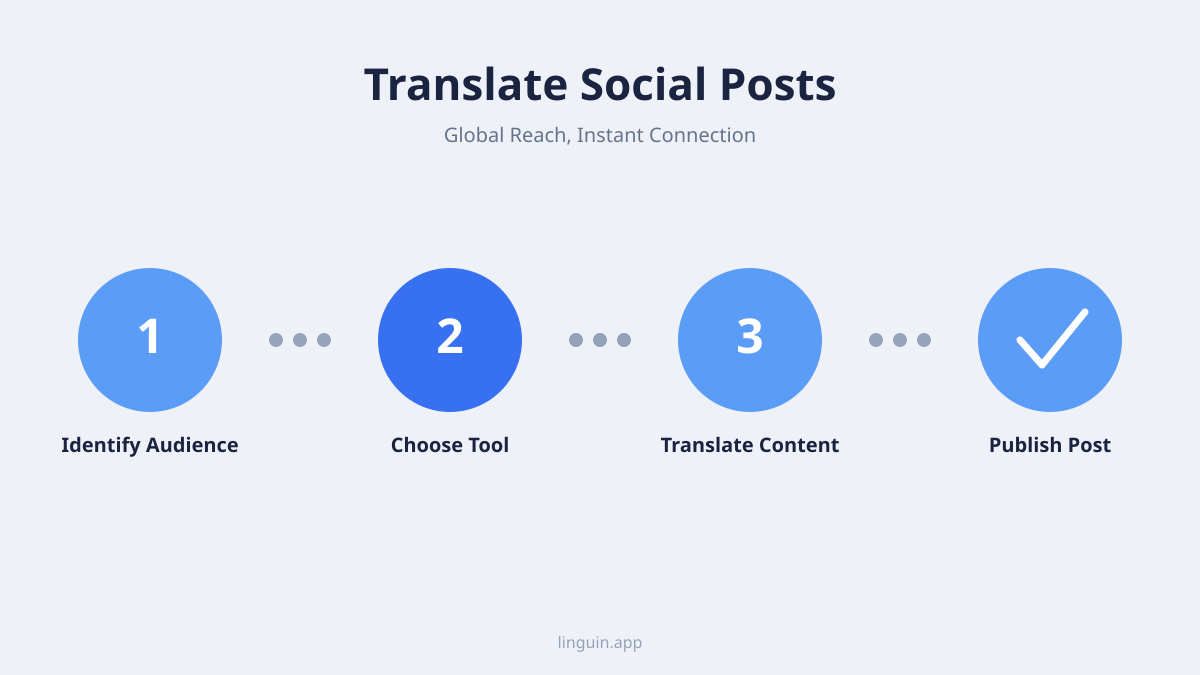
The goal isn’t just to get a word-for-word translation. It’s about capturing the intent, the tone, and the cultural nuances that make social media interactions dynamic. Slang, idioms, emojis, and even the way a sentence is structured can carry a lot of meaning that a simple translator might miss. This is precisely where AI-powered translation tools like Linguin shine. By understanding context and learning from vast amounts of linguistic data, AI can offer translations that are not only accurate but also more natural and culturally relevant.
Translating Social Media Posts: A Platform-by-Platform Approach
While the core need is universal – to understand and be understood – the best approach to translating social media posts can vary slightly depending on the platform you’re using. Let’s break down how you can tackle this across some of the most popular social networks.
Twitter (X): Navigating the Real-Time Feed
Twitter’s fast-paced nature means you’re constantly encountering short, punchy messages. A single tweet can spark a global conversation, and understanding it quickly is key.
- In-Tweet Translation: Many platforms, including X itself, have started to integrate basic translation features. However, these are often limited and can miss the subtle humor or sarcasm that is so prevalent on Twitter.
- Using Browser Extensions: For a more seamless experience, browser extensions are your best friend. Linguin’s Chrome and Safari extensions are designed to work directly within your browser. When you encounter a tweet in a foreign language, simply highlight the text or click the Linguin icon. The extension can then provide an instant translation directly on the page, allowing you to keep scrolling and engaging without interruption. This is particularly useful for following international news, discussions, and trending topics in real-time.
- Translating Threads: Longer conversations can be tricky. If a thread is in another language, you can use Linguin’s features to translate individual tweets within the thread, piecing together the conversation piece by piece. This allows you to follow complex discussions and understand the flow of arguments from different users.
Instagram: Visuals and Captions
Instagram is a highly visual platform, but captions and comments are crucial for context and interaction.
- Caption Translation: When you see an image or video with a caption in a language you don’t understand, simply select the text in your browser (if viewing on desktop via the web) or use Linguin’s mobile app. The app allows you to easily copy and paste text, or even use the camera to translate text directly from your screen. For web users, the Linguin browser extension can often translate captions directly on the page, making it easy to understand the story behind the photo or video.
- Comment Section Debates: The comment section can be a goldmine of opinions and discussions. If you want to join in or just understand what people are saying about a post, highlight comments and use your Linguin extension or app. This is invaluable for understanding audience reactions, engaging with international followers, or participating in global trends.
Facebook: Connecting with Friends and Groups
Facebook remains a dominant platform for personal connections, groups, and news sharing.
- Post and Comment Translation: Facebook often offers its own translation feature, but as with other platforms, the quality can vary. Linguin’s extensions for Chrome and Safari can enhance this experience. When browsing Facebook on your desktop, simply hover over or select foreign text, and Linguin can provide a quick, accurate translation. This is incredibly useful for staying connected with friends and family abroad, or for participating in international Facebook groups.
- Group Discussions: International Facebook groups can be incredibly active. Whether it’s a group for a shared hobby, a professional network, or a community discussion, Linguin can help you follow along. Translating posts and comments within these groups ensures you don’t miss out on valuable information or opportunities for engagement.
TikTok: The Global Dance Floor
TikTok’s short-form video format has a massive global reach, with trends and sounds going viral across languages.
- Video Captions and On-Screen Text: Many TikToks feature captions or on-screen text. While the video itself might be understood visually, the text adds another layer of communication. Linguin’s mobile app, with its ability to translate text from your screen using your camera, is perfect for this. You can quickly translate captions or text overlays without needing to copy and paste.
- Comments: The comment section on TikTok is often a hotbed of witty remarks and passionate discussions. Using Linguin on your mobile device allows you to easily translate these comments, giving you a fuller picture of the community’s reaction to a video and enabling you to join in the fun.
LinkedIn: Professional Networking Worldwide
For professionals, LinkedIn is the primary platform for career development and industry insights. Language should never be a barrier to global opportunities.
- Profile and Post Translation: When encountering profiles or posts in different languages on LinkedIn, Linguin’s browser extensions can be a lifesaver. Translate entire profiles to understand the experience of international professionals, or translate posts and articles to stay abreast of global industry trends and thought leadership. This is essential for job seekers looking to expand their search internationally, or for businesses aiming to understand global market dynamics.
- Messaging: If you’re reaching out to international contacts or recruiters, Linguin’s translation capabilities can help you craft clear and effective messages. Ensure your communication is precise and professional, fostering stronger international business relationships.
Beyond Basic Translation: The Power of Context and AI
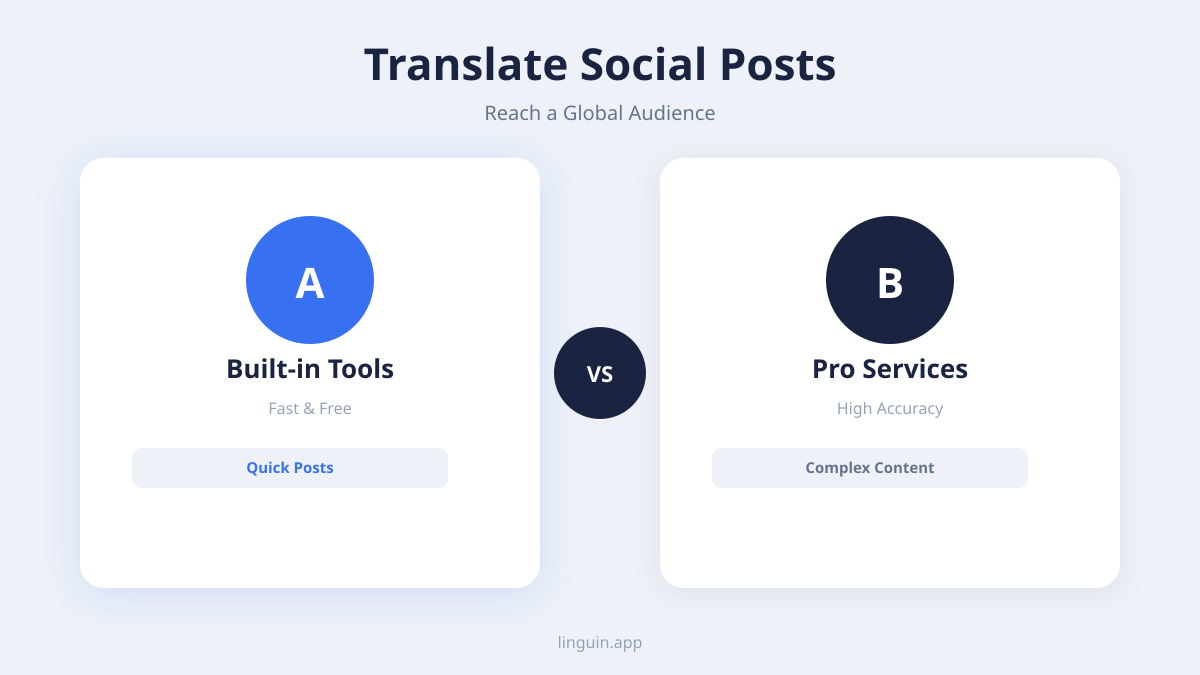
Why rely on an AI-powered tool like Linguin over the built-in features of social media platforms? It comes down to sophistication and context.
- Nuance and Idioms: Social media is rife with slang, idioms, and cultural references that can be difficult for traditional translators to grasp. AI models are trained on vast datasets, allowing them to recognize patterns and understand these nuances more effectively. Linguin, for instance, is designed to capture the spirit of the original message, not just its literal meaning.
- Tone and Sentiment: The tone of a social media post – whether it’s humorous, sarcastic, serious, or enthusiastic – is crucial for understanding. AI can do a better job of inferring this tone from the surrounding text and context, leading to more accurate and natural-sounding translations.
- Consistency Across Devices: Linguin offers a unified translation experience across your macOS devices, iOS devices, and web browsers with its Chrome and Safari extensions. This means you can seamlessly translate social media posts whether you’re on your laptop, your phone, or your tablet, without having to switch between different tools or learn new interfaces.
- Continuous Improvement: AI models are constantly learning and evolving. As you use Linguin, the underlying technology is refined, leading to even more accurate and context-aware translations over time.
Practical Tips for Translating Social Media
To make the most of your translation efforts on social media, keep these tips in mind:
- Identify the Language: If you’re unsure of the language, many browsers and apps have automatic language detection features, or Linguin can often identify it for you.
- Context is King: Always try to understand the context of the post. Is it a casual comment, a news update, or a professional announcement? This helps in interpreting the translation.
- Don’t Be Afraid to Ask for Clarification: If a translation seems unclear or you suspect a nuance is lost, don’t hesitate to politely ask the original poster for clarification, perhaps using a translated version of your question.
- Use Emojis Strategically: Emojis are a universal language to some extent. While they can help convey emotion, be aware that their specific meanings can sometimes vary subtly across cultures.
- Consider the Cultural Background: A direct translation might be technically correct but culturally insensitive. Be mindful of this when engaging in conversations. AI tools like Linguin aim to mitigate this by offering more natural phrasing.
- Save Frequently Used Phrases: If you frequently interact with people in a specific language, consider saving common phrases you need to translate or generate.
- Leverage Browser Extensions: For desktop users, installing Linguin’s Chrome or Safari extension is a game-changer. It integrates translation directly into your browsing experience, making it incredibly efficient.
- Utilize Mobile Apps: For on-the-go translation, Linguin’s iOS app offers powerful features, including text translation and camera-based translation, perfect for quick translations of captions or comments.
Embracing a Connected World
The ability to understand and communicate across languages is no longer a luxury; it’s a necessity in our increasingly interconnected world. Social media is at the forefront of this global exchange, and by mastering the art of translating posts, you open yourself up to a universe of new friends, insights, and opportunities.
Linguin is here to be your trusted companion on this journey. Our AI-powered translation app for macOS, iOS, and our browser extensions for Chrome and Safari are designed to make language barriers a thing of the past. Whether you’re looking to engage with a global audience, stay informed about international events, or simply connect with people from different backgrounds, Linguin empowers you to speak the world’s language.
So, the next time you encounter a post in a foreign tongue, don’t let it pass you by. With Linguin, you have the power to translate, understand, and participate in the global conversation. Dive in, explore, and connect – the world is waiting!