 English
  Español
  Français
  Deutsch
  Português
  Italiano
  Русский
  中文(简体)
  日本語
日本語  한국어
한국어  العربية
  हिन्दी
  Nederlands
  Türkçe
  Polski
Understanding humor, sarcasm, and tone is one of the most difficult tasks in language translation. AI translation systems have made significant progress in this area, moving beyond simple word-for-word substitution. This matters because effective cross-cultural communication relies on conveying not just information, but intent and emotion. This article explains the technical challenges and solutions, showing how modern AI manages the subtleties of human expression across languages.
Key takeaways
- AI translators use context-aware models to detect irony and sarcasm, analyzing entire sentences and conversation history.
- Handling humor often requires cultural adaptation, not direct translation, as jokes rely on shared knowledge and linguistic structure.
- Tone and intent are preserved through semantic analysis, where the AI interprets the underlying meaning and emotional color of the text.
The fundamental challenge of translating humor
Humor is deeply rooted in culture, language structure, and shared context. A pun in English that relies on a word with two meanings often has no direct equivalent in another language. Similarly, a joke based on a cultural reference, like a popular television show or historical event, may be meaningless to someone from a different background. This creates a primary obstacle for any translation system: should it translate the words literally, attempt to find a culturally equivalent joke, or explain the humor?
AI translation approaches this by first classifying the intent of the text. Advanced models are trained on massive datasets containing dialogues, scripts, and social media posts where humor is labeled or implied. They learn patterns associated with jokes, such as setup-punchline structures, unexpected twists, or playful language. For example, an AI might recognize a rhetorical question followed by an absurd answer as a potential joke format. Once intent is identified, the system must decide on a translation strategy.
A direct, literal translation is frequently the least successful method for humor. Consider the English pun “I’m reading a book on anti-gravity. It’s impossible to put down.” Translating “put down” literally into another language loses the double meaning of physically placing a book down and ceasing to read it. A capable AI system might recognize this as a pun and either attempt to find a linguistically similar pun in the target language or rephrase the sentence to convey the playful nature, even if the exact wordplay is lost.
The goal shifts from translating the joke itself to translating the speaker’s intent to amuse. This often involves subtle changes in word choice, sentence structure, or even adding a brief explanatory note to signal lightheartedness. The AI’s success depends on its training data’s diversity and its ability to understand the broader conversation, not just the isolated sentence.
Decoding sarcasm and irony in translation
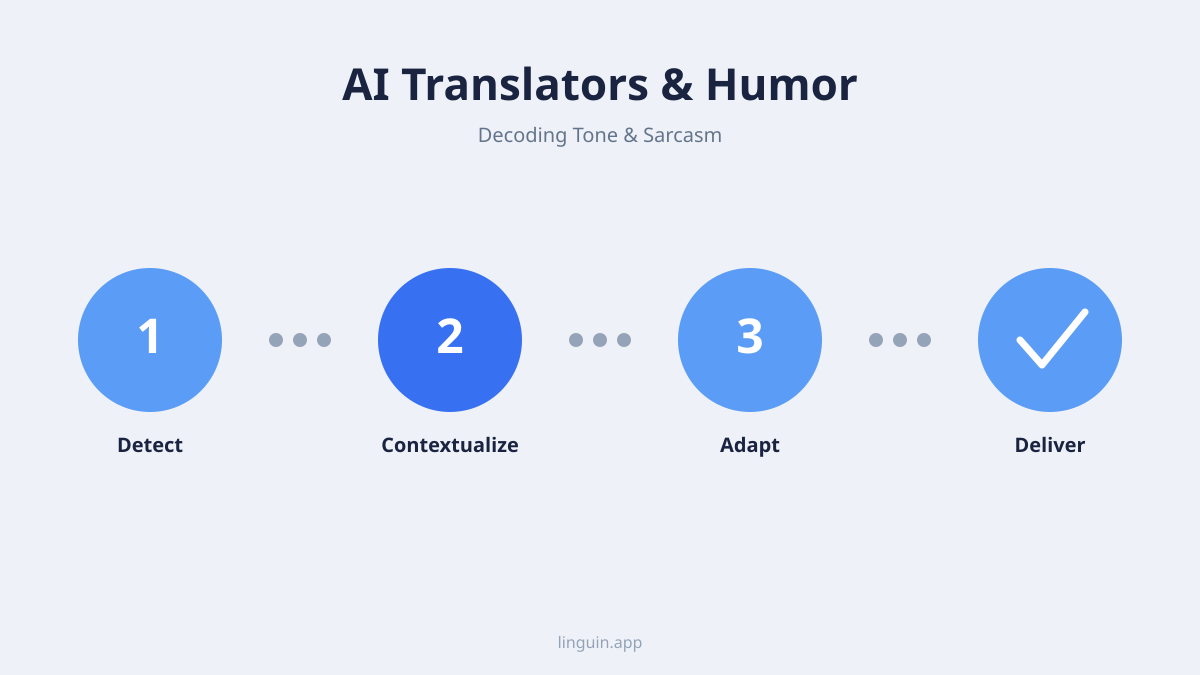
Sarcasm and irony present a unique layer of difficulty because they involve saying the opposite of what is literally meant, often to convey criticism, humor, or emphasis. The cue is rarely in the dictionary definition of the words. It resides in tone, context, and shared understanding between the speaker and listener. For an AI translator, detecting this disconnect between literal meaning and intended meaning is critical.
Detection relies heavily on contextual analysis. An AI model examines the surrounding sentences, the topic of discussion, and even the relationship between speakers if that information is available. For instance, the statement “What a beautiful day” during a torrential downpour is likely sarcastic. The AI cross-references the sentiment of the words with the described situation. It also looks for common linguistic markers of sarcasm, such as exaggerated adjectives, certain punctuation (like ellipses or exclamation marks in specific contexts), or familiar ironic phrases.
Once sarcasm is detected, the translation must preserve that ironic layer. A naive translation might render “Oh, fantastic, another meeting” as a genuinely positive statement. A sophisticated AI translator will choose words and syntactic structures in the target language that carry a similar connotation of exasperation or insincerity. This might involve selecting words with a slightly negative shade, using a particular sentence structure common for irony in that language, or even adding a contextual tag like “(said sarcastically)” in scenarios where the irony is crucial and difficult to convey directly.
Say you’re messaging a colleague in Japan and write, “Great, the server crashed right before the deadline.” A basic translator might send a positive confirmation. A context-aware AI, however, understands the negative event (server crash) and the stressful context (deadline), inferring sarcasm. It would then translate the phrase using Japanese phrasing that conveys frustration and irony, ensuring your colleague understands your genuine sentiment. This process is central to achieving true context-aware translation.
The role of tone and emotional intent
Beyond specific humor or sarcasm, every piece of communication carries a tone: it can be formal, friendly, urgent, apologetic, or enthusiastic. Conveying this emotional intent is essential for effective communication, especially in professional or personal correspondence. AI translation systems now incorporate semantic analysis and sentiment detection to capture and carry over this tonal quality.
Tone is often conveyed through modal verbs, adverbs, punctuation, and phrasing. For example, “Could you possibly send that report?” is more polite and tentative than “Send the report.” The AI analyzes these linguistic features to assign a tonal profile to the source text. It then maps this profile to equivalent constructions in the target language. What constitutes politeness or formality varies greatly between cultures; a directly translated polite phrase might seem cold or overly familiar elsewhere. The AI must understand these cultural norms of interaction.
This is particularly important for business communication and app localization, where the tone must align with brand voice and cultural expectations. A marketing slogan that is bold and cheeky in English might need to be adapted to be confidently respectful in another language to achieve the same impact. The translator’s job is to find the emotional and social equivalent, not the lexical one.
For example, an English email ending with “Looking forward to your feedback” is neutral and professional. A direct translation might work in many languages. However, if the original tone was more enthusiastic-”Really excited to hear what you think!”-the AI should select words in the target language that convey positive anticipation, perhaps using an exclamation point or a more vibrant adjective, if appropriate for that culture. Preserving this intent prevents misunderstandings and maintains the relationship’s warmth or professionalism. You can see how this focus on intent is a key factor in modern ai translation accuracy.
How large language models changed the game
The advent of large language models (LLMs) marked a significant leap in handling nuance. Earlier statistical and rule-based translation systems struggled with anything beyond literal meaning. LLMs, trained on vast portions of the internet and literary corpora, develop a more nuanced understanding of how language is used in real-world contexts, including its figurative and emotional dimensions.
These models learn patterns at a deep, contextual level. They don’t just know that “break a leg” is an idiom for good luck. They understand the scenarios in which it is used (performances, challenging tasks), the relationship between the speakers (often informal or collegial), and the positive intent behind it. This allows them to handle a wider range of non-literal language, from idioms and metaphors to the subtle shades of sarcasm and humor discussed earlier. For a deeper dive into how AI handles idiomatic expressions, see our article on ai translation idioms cultural nuances.
The key mechanism is attention. LLMs can weigh the importance of different words in a sentence and their relationship to each other and to previous sentences in a conversation. When processing “This is just what I needed today,” the model pays attention to the word “just” and the broader context. If the preceding text describes a series of minor disasters, the model can infer sarcasm. If the context describes receiving a helpful gift, it interprets the phrase literally. This dynamic, context-sensitive understanding is what allows for more natural and accurate translations of complex human expression.
Practical limits and where AI still struggles
Despite impressive advances, AI translation of humor and tone is not flawless. Its performance is inherently tied to the data it was trained on. If a model has not been exposed to enough examples of a particular type of joke or ironic construct in a specific language pair, it will likely fail to translate it effectively. Niche cultural references, very recent slang, and highly nuanced literary irony remain challenging.
Another limitation is the lack of real-world, embodied experience. Humans understand sarcasm partly through vocal tone, facial expression, and shared physical context. A pure text-based AI misses these multimodal cues. While models can infer from textual context, an ambiguous statement without clear contextual clues can be misinterpreted. Furthermore, what is considered humorous or appropriately sarcastic varies significantly across cultures. An AI might correctly translate the words of a joke but not recognize that the subject matter is taboo or offensive in the target culture.
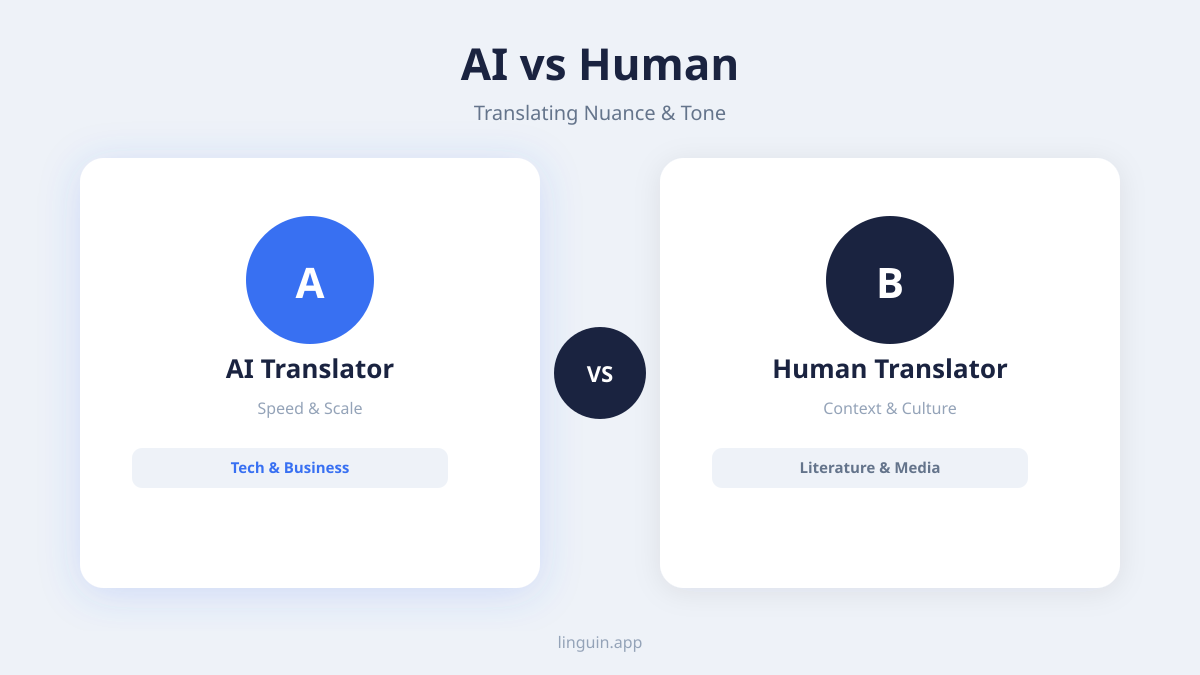
Therefore, the most effective use of AI for translating nuanced content involves human-in-the-loop systems for high-stakes scenarios, or users applying critical judgment. It is a powerful tool for getting the gist and tone correct in most everyday situations-like social media interactions, casual emails, or understanding the general sentiment of a foreign article-but it may not yet be suitable for translating a stand-up comedy special without human adaptation. Understanding these limits helps set realistic expectations, as explored in our comparison of ai vs human translation.
Best practices for users
To get the best results when translating content with humor, sarcasm, or specific tone, you can follow several practical strategies. These help guide the AI and compensate for its current limitations.
First, provide as much context as possible. If you are translating a single line from a longer conversation, include the preceding sentence or two. This gives the AI the clues it needs to detect irony or register the formal/informal tone. Many advanced translation apps and browser extensions, like the Linguin Chrome extension, allow you to translate selected text while having access to the full page context, which improves accuracy.
Second, be aware of cultural differences. If you are crafting a message you intend to be funny, consider if the concept translates culturally. An AI might translate the words of a joke about a local sports team perfectly, but the meaning will be lost. In such cases, you might choose to explain the reference or use a different, more universal form of humor.
Third, use the right tool for the task. For translating informal chats or social media posts where tone is key, choose an AI translator known for its context-aware capabilities. For translating a formal contract, a tool optimized for technical accuracy is better. Our guide on the best translation app 2025 can help you select the right application for your specific needs.
Finally, review the output. Does the translated text “feel” right? Does it carry the same emotional weight or playful intent as the original? If something seems off, try rephrasing the source text slightly or using a different translation service to compare results. This iterative approach leverages AI’s speed while incorporating human sensibility.
Frequently asked questions
Can AI translation accurately translate puns and wordplay?
Rarely with perfect fidelity, as puns are tightly bound to the specific sounds and meanings of words in the source language. A skilled AI translator will recognize the text as wordplay and may attempt one of two strategies: finding a different pun in the target language that creates a similar humorous effect, or abandoning the pun structure and translating the sentence to convey a general sense of playfulness or wit. The exact joke may be lost, but the intent to amuse can be preserved.
How does an AI translator know if a sentence is sarcastic?
It analyzes contextual clues. The AI looks at the literal meaning of the sentence and compares it to the broader conversation topic and sentiment. It searches for mismatches, common ironic phrases, and exaggerated language. For example, if the text describes a negative situation but uses positive words (“Perfect! I missed my bus”), the model can infer sarcasm based on patterns learned from its training data containing millions of similar examples.
Is AI translation of tone reliable for business emails?
It has become highly reliable for standard business tones like formality, politeness, and urgency. AI models are extensively trained on professional correspondence and understand the linguistic markers of these tones across cultures. However, for very nuanced diplomatic language, highly sensitive negotiations, or communications where subtle implication is critical, a final review by a bilingual human is still recommended to ensure perfect alignment with cultural business norms.
What is the biggest risk when using AI to translate humor?
The biggest risk is causing accidental offense or confusion. A joke that is benign in one culture might touch on a sensitive topic in another. The AI may translate the words correctly but be unaware of the cultural taboos or historical context that make the joke inappropriate. It is always wise to consider the cultural background of your audience when sharing translated humorous content.
Do I need a different translator for casual vs. formal tone?
Not necessarily. Modern, high-quality AI translators like Linguin are designed to handle a spectrum of tones by dynamically adjusting formality levels and word choice based on the detected context of the source text. They can switch between translating a casual text message with contractions and slang and a formal document with technical jargon, all within the same engine.
The path to more nuanced cross-language communication
Translating humor, sarcasm, and tone is about bridging human understanding, not just converting vocabulary. While AI has moved far beyond literal translation, its success lies in interpreting intent and finding culturally appropriate equivalents. The core points to remember are that context is everything for detecting nuance, and that effective translation often requires adaptation, not just direct substitution.
The next step is to experience this capability firsthand. Try translating a sentence with a clear tone-like a sarcastic remark or a friendly inquiry-using a modern AI translator. Observe how it handles word choice and structure. You can test this with Linguin across its macOS, iOS, or browser extension platforms, which are built to prioritize this context-aware approach. By understanding both the power and the limits of the technology, you can use it to communicate more effectively and authentically across any language barrier.