
 English
  Español
  Français
  Deutsch
  Português
  Italiano
  Русский
  中文(简体)
  日本語
日本語  한국어
한국어  العربية
  हिन्दी
  Nederlands
  Türkçe
  Polski
The internet is a boundless ocean of information, a vibrant tapestry woven from countless cultures and languages. Yet, for many, this vast expanse can feel a little daunting when the content isn’t in their native tongue. Imagine stumbling upon a fascinating research paper, a critical business document, or even just an engaging travel blog, only to be met with an impenetrable wall of foreign characters. This is where the magic of a website translator plugin comes in, transforming potential frustration into seamless understanding.
A website translator plugin is essentially a digital interpreter for your web browser. It’s a small but powerful piece of software that, once installed, can automatically detect the language of a webpage you’re visiting and offer to translate it into your preferred language. This simple yet revolutionary functionality opens up a world of possibilities, allowing you to consume content from anywhere, for any purpose, without being limited by linguistic divides. Whether you’re a student researching international topics, a business professional keeping an eye on global markets, a traveler planning your next adventure, or simply someone curious about the world, a good website translator plugin is an indispensable tool.
At its core, a website translator plugin works by leveraging sophisticated machine translation technology. When you land on a page, the plugin analyzes the text. If it identifies a language different from your browser’s default or your chosen setting, it presents you with an option to translate. Upon confirmation, the plugin sends the webpage’s text to a powerful translation engine – often cloud-based – which then processes the text and returns the translated version. This translated text is then displayed in your browser, often seamlessly replacing the original content. The effectiveness of this translation relies heavily on the quality of the underlying translation engine, as well as the plugin’s ability to accurately detect languages and reformat the translated text without disrupting the webpage’s layout.
Why You Need a Website Translator Plugin
The benefits of having a reliable website translator plugin at your fingertips are numerous and far-reaching. For starters, it democratizes access to information. No longer are you limited to content published in your native language. This is particularly crucial in academic and research settings, where groundbreaking discoveries and essential knowledge might be initially published in languages other than your own. Students and researchers can delve into international journals, access global academic communities, and broaden their understanding of complex subjects by easily translating relevant materials.
Beyond academia, businesses stand to gain immensely. In today’s interconnected global economy, staying informed about international trends, competitor activities, and market developments is paramount. A website translator plugin allows businesses to monitor foreign news outlets, analyze competitor websites in different regions, and even understand international customer feedback more effectively. This can lead to better strategic decisions, improved market entry plans, and a stronger competitive edge. For small businesses looking to expand their reach, understanding foreign markets through translated content can be the first step towards international success.
Travelers, of course, are another primary beneficiary. Planning a trip often involves navigating a sea of foreign websites for booking flights, accommodations, local attractions, and understanding cultural nuances. A website translator plugin can make this process infinitely smoother. You can research destinations, read reviews in their original language, and even understand local transport information with ease. Once you’re on your trip, it can be a lifesaver for deciphering menus, understanding signs, and communicating basic needs.
Furthermore, personal enrichment and cultural understanding are greatly enhanced. The internet connects us to people and ideas from all corners of the globe. A website translator plugin allows you to explore art, literature, music, and diverse perspectives from cultures you might not otherwise have access to. It fosters empathy, broadens horizons, and makes the world feel a little smaller and more interconnected. It’s about more than just understanding words; it’s about understanding people and their stories.
Choosing the Right Website Translator Plugin
With the proliferation of browser extensions, selecting the right website translator plugin can feel like navigating a crowded marketplace. Several factors should guide your decision, ensuring you pick a tool that is both effective and a pleasure to use.
Firstly, translation quality is paramount. Not all translation engines are created equal. Some excel in certain language pairs or specific domains (like technical or literary text) better than others. Look for plugins that leverage reputable translation services. Many modern translators, like Linguin, utilize advanced neural machine translation (NMT) models, which have significantly improved fluency and accuracy compared to older statistical methods. Reading reviews and seeking recommendations can provide valuable insights into the real-world performance of different plugins.
Ease of use is another critical factor. The best translator plugins should be unobtrusive. They should offer clear options for translation, ideally with automatic detection, and allow for simple language selection. A cluttered interface or a confusing setup process can negate the benefits of the plugin. Linguin, for instance, is designed with user experience in mind. Its intuitive interface and straightforward settings ensure that translating a webpage is a quick and effortless process, allowing you to focus on the content, not the tool.
Platform compatibility is also important. You want a plugin that works seamlessly across all your devices and browsers. If you use macOS, iOS, Chrome, and Safari, ensure the translator is available for all these platforms. This consistency ensures you have a unified translation experience whether you’re browsing on your desktop or on the go. Linguin offers its powerful translation capabilities across macOS, iOS, Chrome, and Safari, providing a cohesive solution for all your devices.
Privacy and security should never be overlooked. When you use a translation plugin, you’re essentially sending text data to a third-party service. It’s crucial to understand how your data is handled. Look for plugins with clear privacy policies that explain what data is collected, how it’s used, and whether it’s stored. Reputable services will prioritize user privacy.
Finally, consider extra features. Some plugins offer additional functionalities, such as offline translation (though this is less common for web translation), the ability to translate selected text snippets, or a glossary feature for custom translations of specific terms. While core translation is key, these extras can enhance your workflow.
How to Use a Website Translator Plugin Effectively
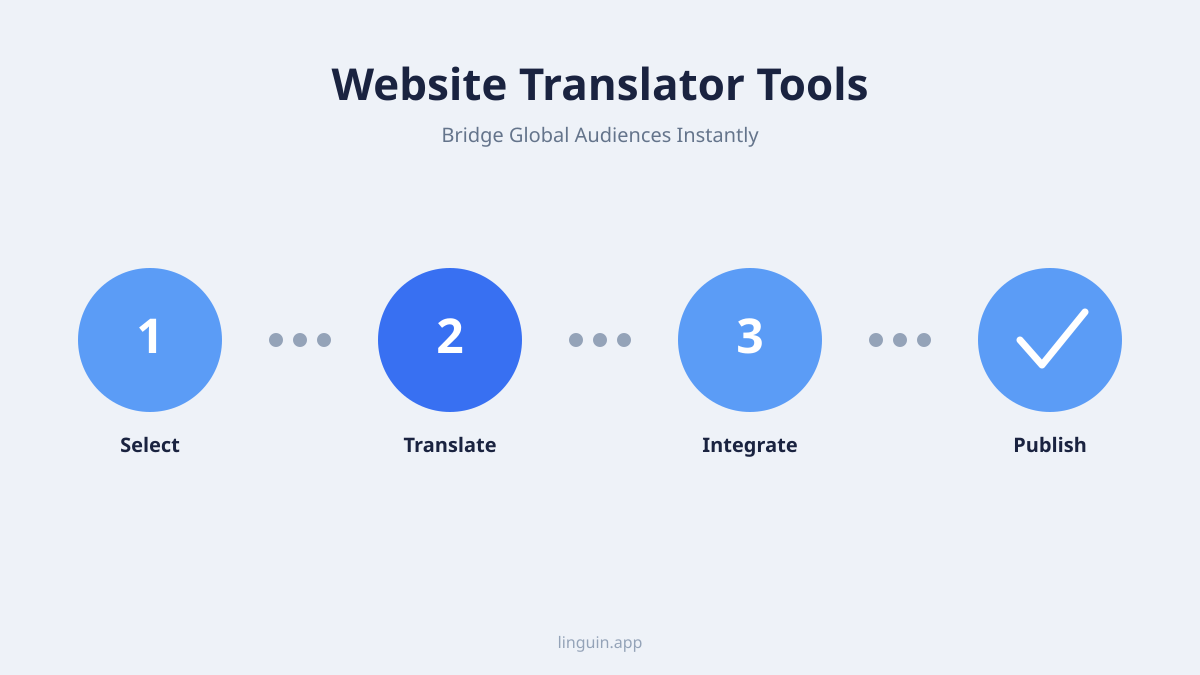
Once you’ve chosen a website translator plugin, integrating it into your daily browsing habits is straightforward. Most plugins operate in a similar fashion, but understanding a few key principles will help you get the most out of them.
The most common mode of operation is automatic detection. When you navigate to a webpage in a foreign language, the plugin’s icon in your browser’s toolbar will typically light up or display a notification. Clicking on this icon will usually present a prompt asking if you wish to translate the page. A single click often suffices. Many plugins also allow you to set your preferred language as the default, so translations happen automatically without requiring an initial prompt each time.
Beyond automatic page translation, many plugins offer the ability to translate specific parts of a webpage. This can be incredibly useful if you only need to understand a particular paragraph or sentence, or if you want to compare the original text with the translation. Typically, you would select the text you want translated, then right-click and choose a “Translate Selection” option from the context menu.
Customization is also key to a truly personalized translation experience. Most good translator plugins allow you to:
- Set your preferred display language: This is the language you want webpages to be translated into.
- Manage language pairs: You can often specify which languages you want the plugin to automatically translate from, or exclude certain languages from translation if you prefer to see them in their original form.
- Configure translation behavior: Some plugins let you choose whether to always translate pages in a specific language, or to only translate when prompted.
- Handle exceptions: You might want to exclude certain trusted websites from automatic translation.
Linguin’s approach emphasizes simplicity and power. Once installed, it automatically recognizes foreign language content. With a single click on the Linguin icon in your toolbar, you can translate the entire page. For specific text, simply highlight it, and Linguin provides an instant translation. The settings panel allows you to fine-tune your preferences, ensuring the translation experience perfectly matches your needs. Whether you’re a casual browser or a power user, Linguin adapts to your workflow.
Advanced Tips for Enhanced Translation
While basic functionality covers most user needs, there are advanced techniques to elevate your website translation experience.
Leverage Browser Settings: Ensure your browser’s language preferences are set correctly. Most translator plugins integrate with your browser’s default language settings. By setting your primary language in your browser’s settings, you help the translator plugin identify your preferred output language more accurately.
Understand Translation Limitations: Machine translation, even the most advanced NMT, is not perfect. Idioms, cultural references, slang, and highly technical jargon can sometimes be mistranslated or lose their nuance. Be aware of these limitations, especially when dealing with critical information. If a translation seems odd or incomplete, try rephrasing your query if you’re using a translation tool to input text, or consider consulting a human translator for highly sensitive documents.
Combine with Other Tools: For deeper dives into foreign-language content, consider using a website translator plugin in conjunction with other tools. For instance, if you’re researching a new concept, you might translate an article and then use a separate AI summarization tool to quickly grasp the main points. For more nuanced understanding of cultural context, you could use the translated content as a starting point for further research on cultural websites or forums.
Provide Feedback: Many translation services, including those powering plugins like Linguin, allow users to provide feedback on translations. If you encounter a mistranslation, take a moment to report it. This feedback loop is invaluable for improving the accuracy and quality of the translation engine over time, benefiting not only yourself but all users.
Offline Considerations: While most web translators are cloud-based, some platforms might offer limited offline capabilities for specific languages or within their desktop applications. If you anticipate needing to translate content in areas with unreliable internet access, investigate whether your chosen translator offers any offline features for its desktop or mobile applications.
The Future of Website Translation
The world of translation is evolving at an astonishing pace. Machine learning and artificial intelligence are continuously pushing the boundaries of what’s possible. We are moving towards a future where language barriers become increasingly invisible. Expect to see even more sophisticated context awareness, improved handling of nuances and colloquialisms, and potentially even real-time, seamless translation that feels as natural as a conversation in your native tongue.
Tools like Linguin are at the forefront of this evolution, constantly refining their AI models and user interfaces to provide the most accurate, intuitive, and powerful translation experience possible. The goal is not just to translate words, but to facilitate genuine understanding and connection across cultures. As the internet continues to be the primary conduit for global interaction, the role of effective website translator plugins will only grow in importance. They are not just tools for convenience; they are essential bridges connecting us to a richer, more informed, and more interconnected world. Embrace the power of translation, and unlock the full potential of the web.
-vs-translator.png)